
Tips to Manage Summer Leaf Scorch in Southern Utah
Tree Service St George Utah | Keeping Your Trees Healthy Through the Summer Heat
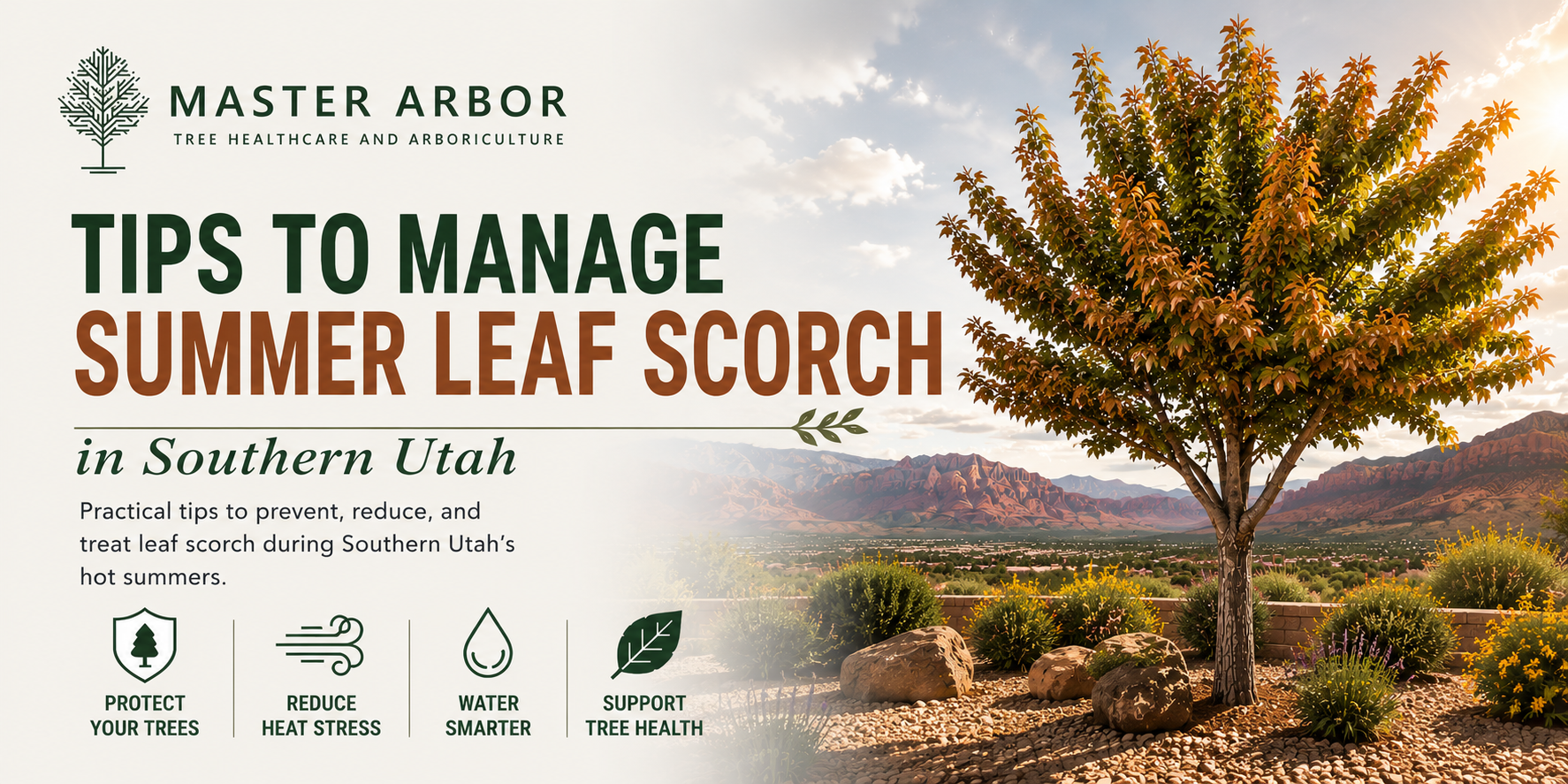
Summers in Southern Utah are known for their long days, intense sunshine, and triple-digit temperatures. While many landscape trees are adapted to warm weather, prolonged periods of extreme heat can push them beyond their limits, leading to a condition known as summer leaf scorch. If you've noticed leaves turning brown around the edges, curling, or dropping earlier than normal, your tree may be telling you it's under stress.
At Master Arbor, we help homeowners throughout St. George, Washington City, Hurricane, Ivins, Silver Reef, and across Washington County identify the causes of summer leaf scorch and take steps to keep trees healthy throughout the hottest months of the year. The good news is that with proper care, many trees can recover and continue to thrive.
What Is Summer Leaf Scorch?
Summer leaf scorch occurs when a tree loses water through its leaves faster than its roots can absorb and replace it. As moisture becomes limited, the leaf edges begin to dry out and turn brown. In severe cases, leaves curl, become brittle, and fall prematurely. Leaf scorch is not a disease. Instead, it's a symptom that your tree is experiencing environmental stress.
Why Summer Leaf Scorch Happens in Southern Utah
Southern Utah's climate creates ideal conditions for leaf scorch.
Common contributing factors include:
Temperatures above 100°F
Low humidity
Hot afternoon winds
Drought conditions
Compacted or rocky soil
Reflective heat from gravel, concrete, and patios
Improper watering
Even mature trees can develop scorch during extended heat waves.
How to Recognize Summer Leaf Scorch
Common symptoms include:
Brown or crispy leaf edges
Yellow band between green tissue and brown margins
Leaf curling
Premature leaf drop
Thin canopy
Wilting during the hottest part of the day
Because these symptoms resemble insect or disease damage, it's important to identify the true cause before beginning treatment.
Trees Most Likely to Develop Leaf Scorch
Although any tree can experience scorch, we most commonly see it on:
Maple
Ash
Birch
Redbud
Linden
Fruit trees
Newly planted ornamental trees
Young trees and recently transplanted trees are especially vulnerable because their root systems are still developing.
1. Water Deeply and Consistently
The single most important step in managing leaf scorch is proper watering.
Instead of watering every day for a few minutes:
✔ Water deeply
✔ Water slowly
✔ Reach 12–24 inches into the soil
✔ Focus on the drip line rather than the trunk
Deep watering encourages deeper roots that are more resilient during extreme heat.
For detailed recommendations, visit our Tree Watering Guide for Southern Utah.
2. Add Mulch Around the Root Zone
Mulch is one of the easiest ways to reduce heat stress.
Benefits include:
Lower soil temperatures
Reduced evaporation
Improved moisture retention
Healthier root systems
Apply 2–4 inches of organic mulch while keeping it several inches away from the trunk.
3. Avoid Heavy Summer Pruning
Leaves help shade branches and the trunk from intense sunlight. Removing too much foliage during the hottest part of summer can actually increase stress and make leaf scorch worse. Professional tree pruning southern utah focuses on removing hazardous or damaged limbs while preserving enough canopy to protect the tree.
4. Check for Insects
Heat-stressed trees become more attractive to pests.
Watch for:
Aphids
Spider mites
Scale insects
Borers
If insects are contributing to your tree's decline, professional tree insect prevention southern utah services can stop infestations before they become severe.
5. Improve Soil Health
Healthy roots need healthy soil. Compacted or nutrient-poor soils common throughout Washington County can reduce water absorption. Professional arborists can evaluate soil conditions and recommend treatments that improve root health and long-term tree vigor.
6. Protect Young Trees from Additional Heat
Young trees often experience both leaf scorch and trunk sun scald.
Help protect them by:
Wrapping trunks when appropriate
Maintaining consistent watering
Using mulch
Avoiding unnecessary pruning
Monitoring frequently during heat waves
Can Trees Recover from Summer Leaf Scorch?
Yes. Although scorched leaves usually won't recover, many trees produce healthy new growth once temperatures moderate and proper care is restored. The goal is to reduce stress before repeated years of scorch weaken the tree permanently.
Why Professional Tree Care Matters
At Master Arbor, we specialize in diagnosing tree stress throughout:
St. George
Washington City
Hurricane
Ivins
Silver Reef
Washington County
Our certified arborists evaluate watering practices, soil conditions, insects, and overall tree health to develop customized care plans designed specifically for Southern Utah's climate.
Don't Wait Until Summer Damage Becomes Permanent
Brown leaves are more than just a cosmetic issue—they're your tree's way of signaling that something isn't right. The sooner you address the underlying cause, the better chance your tree has to recover and continue growing for years to come.
Schedule Your Free Tree Health Evaluation
Master Arbor provides:
Tree health inspections
Watering recommendations
Soil evaluations
Heat stress assessments
Insect prevention
Seasonal tree care plans
👉 Contact Master Arbor today for your free consultation.
Related Articles
Continue learning with these helpful resources:
Frequently Asked Questions
-
Usually not. While damaged leaves won't recover, many trees will produce healthy new growth once the underlying stress is corrected.
-
Generally, no. Leaves that are still partially green continue producing energy for the tree and should remain until they naturally drop.
-
Not necessarily. Deep, consistent watering helps, but compacted soil, root damage, insects, or heat stress may also contribute.
-
Maples, ash, birch, redbud, fruit trees, and newly planted trees are among the most susceptible species in Southern Utah.
-
Maintain a consistent deep watering schedule, apply mulch, avoid excessive summer pruning, protect young trees from heat, and schedule regular tree health inspections.
