
Monsoon Season Tree Safety: Preparing for High Winds & Storm Damage
Tree Service St George Utah | Protect Your Trees Before the Next Summer Storm
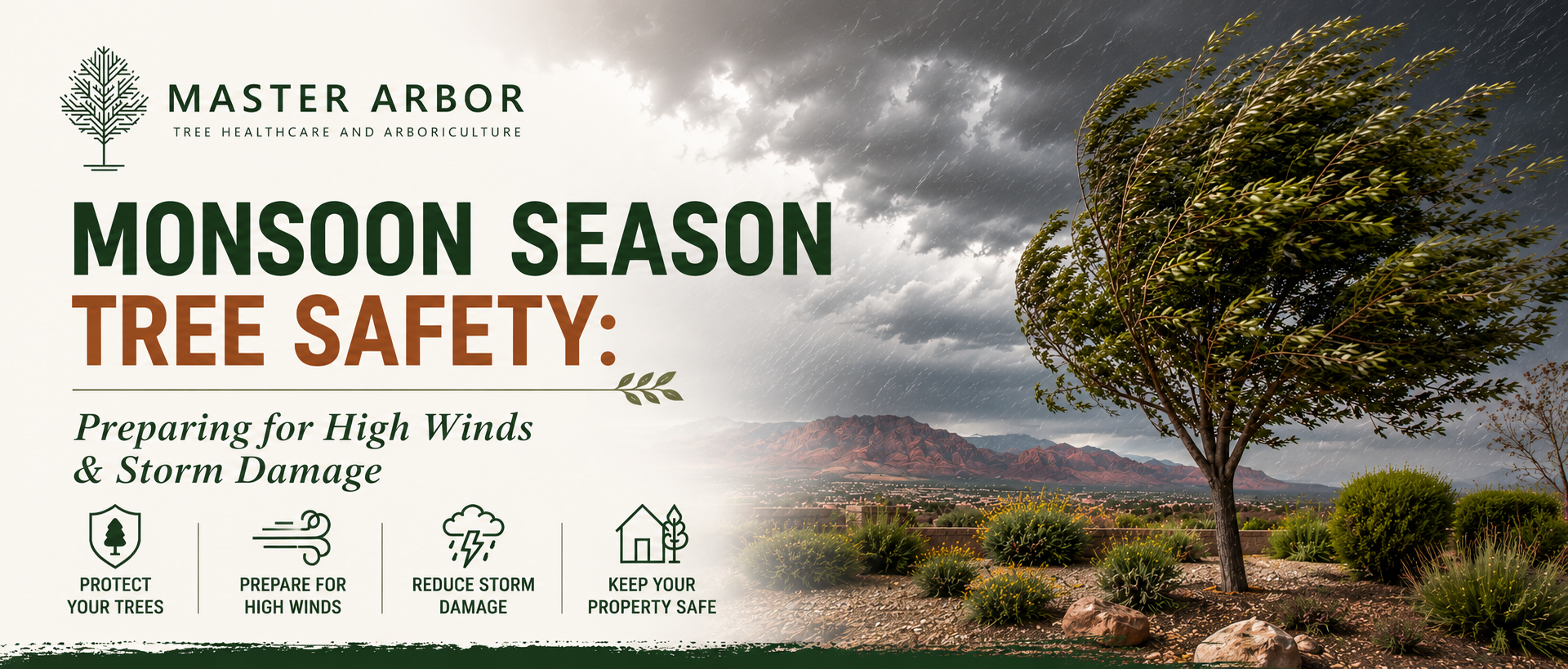
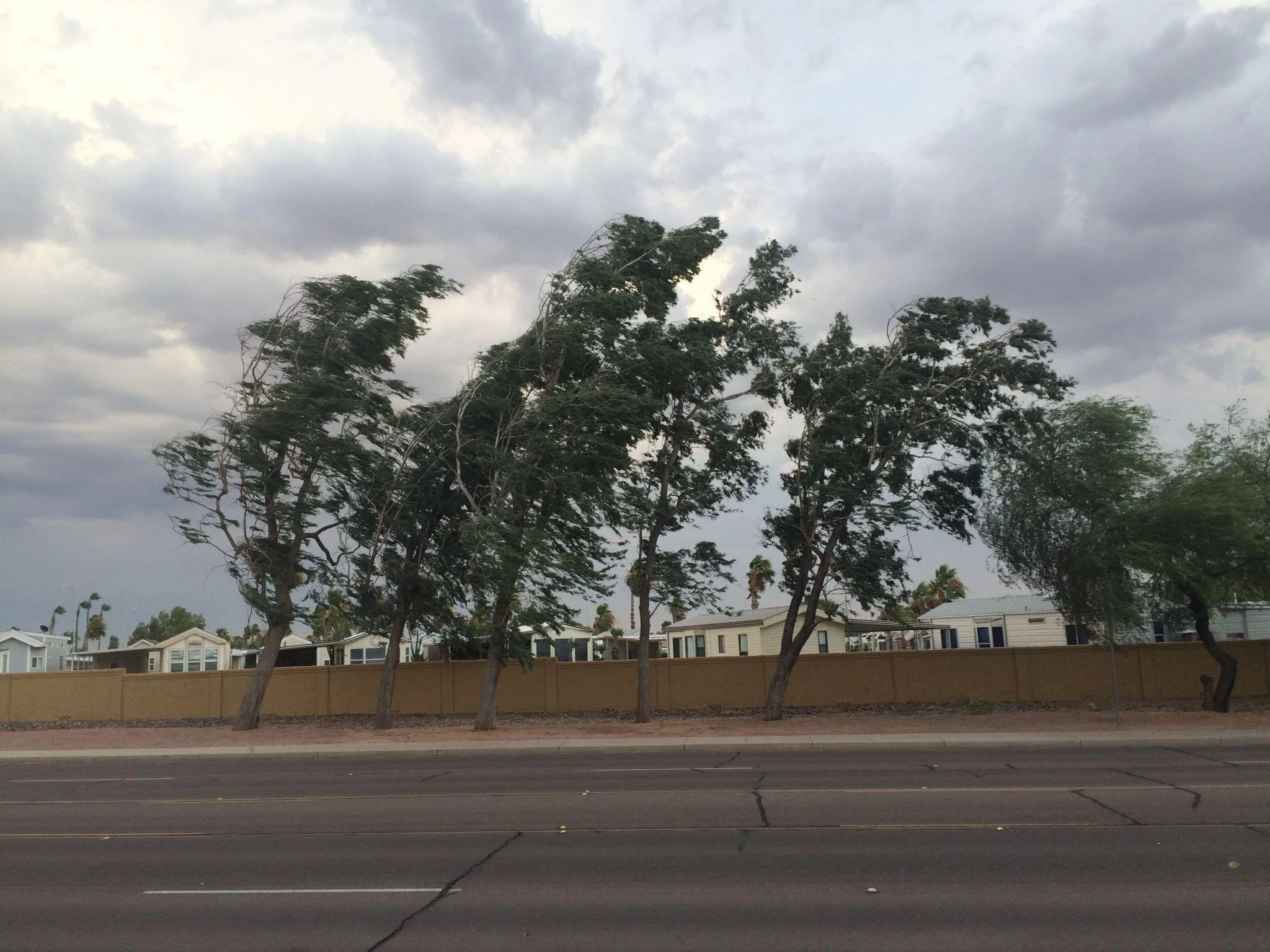
Monsoon season is one of the most beautiful—and unpredictable—times of the year in Southern Utah. Afternoon thunderstorms can roll into St. George, Hurricane, Washington City, Ivins, Silver Reef, and throughout Washington County with little warning, bringing powerful wind gusts, heavy rain, lightning, and even flash flooding.
While healthy trees often withstand these storms, weak or neglected trees are much more likely to lose limbs, split, uproot, or fall completely.
At Master Arbor, we see an increase in emergency tree calls every monsoon season. Fortunately, many storm-related tree failures are preventable with proactive maintenance.
In this guide, we'll explain how to prepare your trees before the next storm arrives and what to do if damage occurs.
Why Monsoon Storms Can Be Hard on Trees
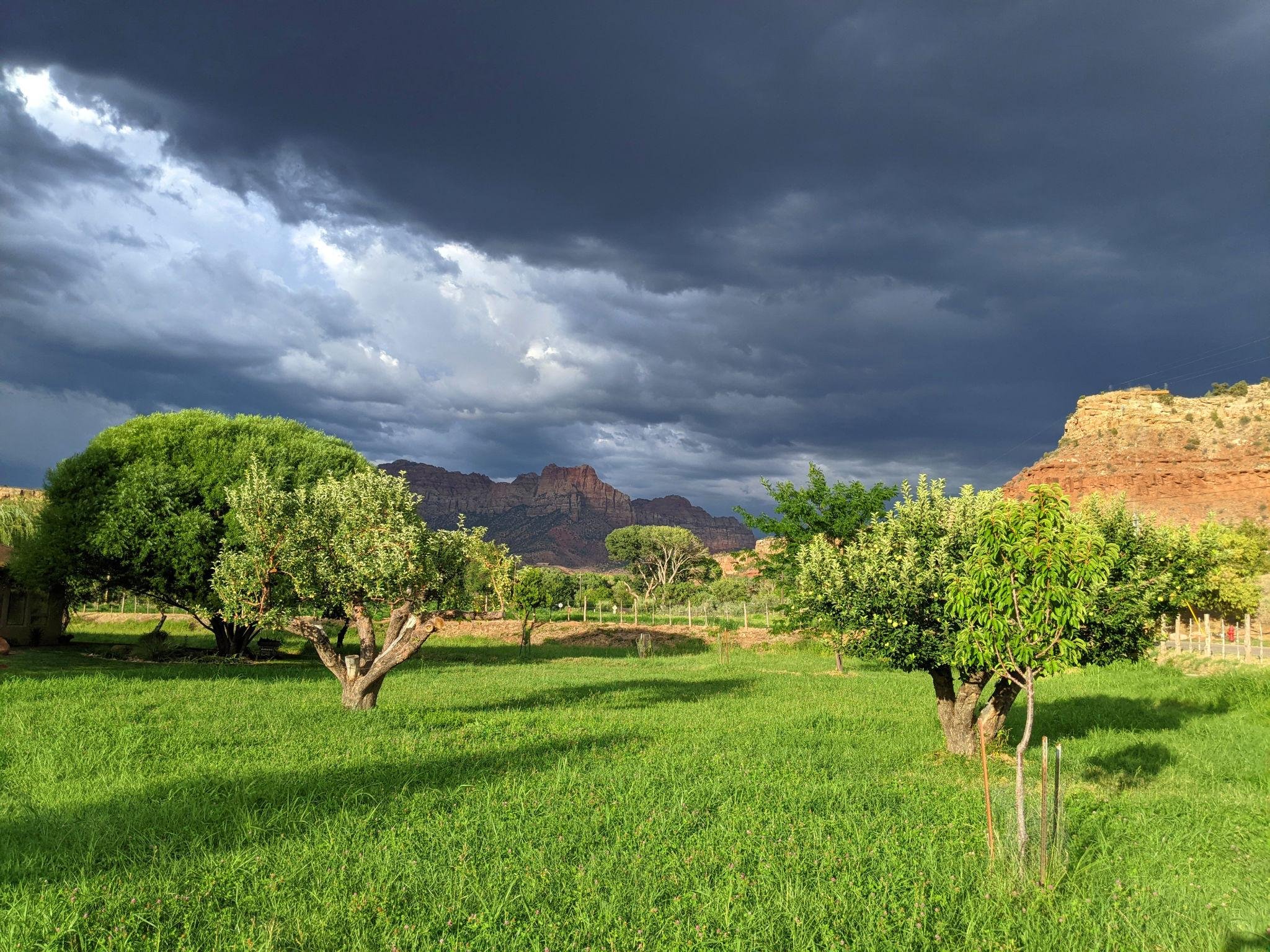
Southern Utah monsoon storms are unique because they often develop quickly and bring several weather hazards at once:
Wind gusts exceeding 40–60 mph
Heavy downpours in a short period
Lightning strikes
Saturated soil
Flash flooding
Sudden temperature changes
Trees that are already stressed by summer heat, drought, or insects are much more likely to suffer damage during these storms.
Which Trees Are Most at Risk?
Not every tree responds to storms the same way.
Trees at greater risk include:
Trees with dead or dying limbs
Trees with multiple trunks or weak branch unions
Trees with previous storm damage
Trees affected by insects or disease
Trees with shallow roots
Recently planted trees
Trees that have been improperly pruned
Even healthy trees can become hazardous if they have structural defects that haven't been addressed.
Warning Signs Your Tree May Fail During a Storm
Before monsoon season begins, inspect your trees for:
Dead or hanging branches
Large cracks in the trunk
Split branch unions
Leaning trees
Hollow trunks
Mushrooms growing near the base
Exposed roots
Excessive dead wood in the canopy
If you notice any of these issues, it's best to have a certified arborist evaluate the tree before the next storm.
Best Ways to Reduce Storm Damage
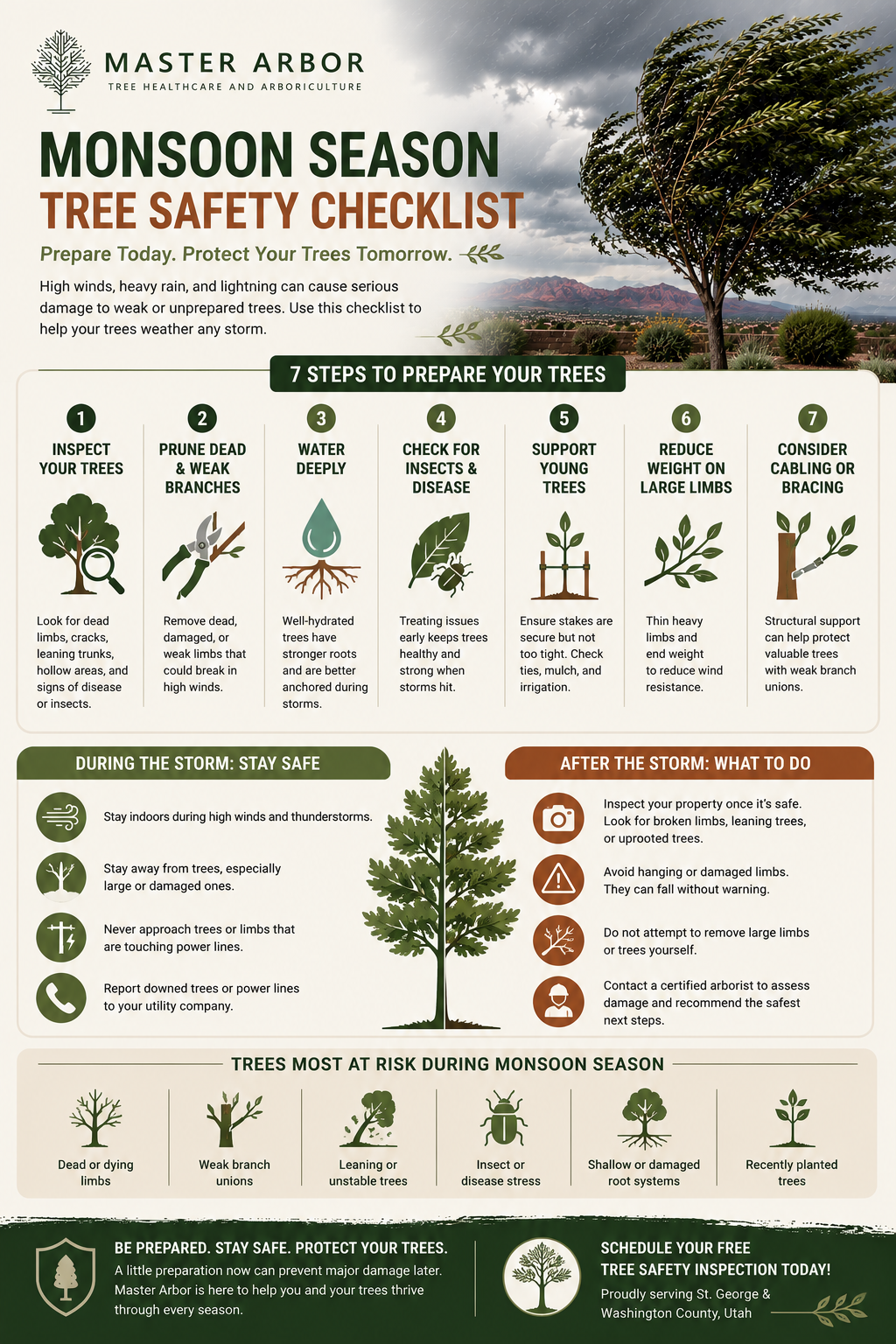
1. Prune Dead and Weak Branches
Professional pruning helps:
Remove dead limbs
Reduce wind resistance
Improve canopy balance
Eliminate weak branch attachments
Reduce the chance of broken limbs
Avoid excessive topping or removing too much foliage, as this can actually weaken the tree.
Professional tree pruning southern utah is one of the best investments you can make before monsoon season.
2. Water Trees Properly Before Storm Season
Healthy roots anchor healthy trees.
Ironically, drought-stressed trees are often more likely to fail during storms.
Deep watering encourages stronger root systems and helps trees better withstand both wind and heat.
Continue following a deep watering schedule throughout the summer.
➡ Learn more in our Ultimate Tree Watering Guide for Southern Utah.
3. Address Insect Problems Early
Trees weakened by insects often have brittle wood and reduced structural strength.
Common Southern Utah pests include:
Aphids
Spider mites
Scale insects
Borers
Routine tree insect prevention southern utah helps trees remain healthy enough to withstand severe weather.
4. Inspect Young Trees and Stakes
Young trees need extra attention before storm season.
Check that:
Stakes are secure but not overly tight.
Tree ties allow slight movement.
Root balls are stable.
Mulch is in place.
Irrigation is functioning properly.
Young trees that aren't well established are more likely to lean or uproot during heavy winds.
5. Reduce Weight on Overextended Limbs
Large horizontal branches carrying excessive weight are more likely to fail during storms.
A certified arborist can selectively reduce end weight while preserving the tree's natural appearance and health.
This is especially important for mature shade trees growing near:
Homes
Driveways
Power lines
Patios
Play areas
6. Consider Cabling or Bracing for Valuable Trees
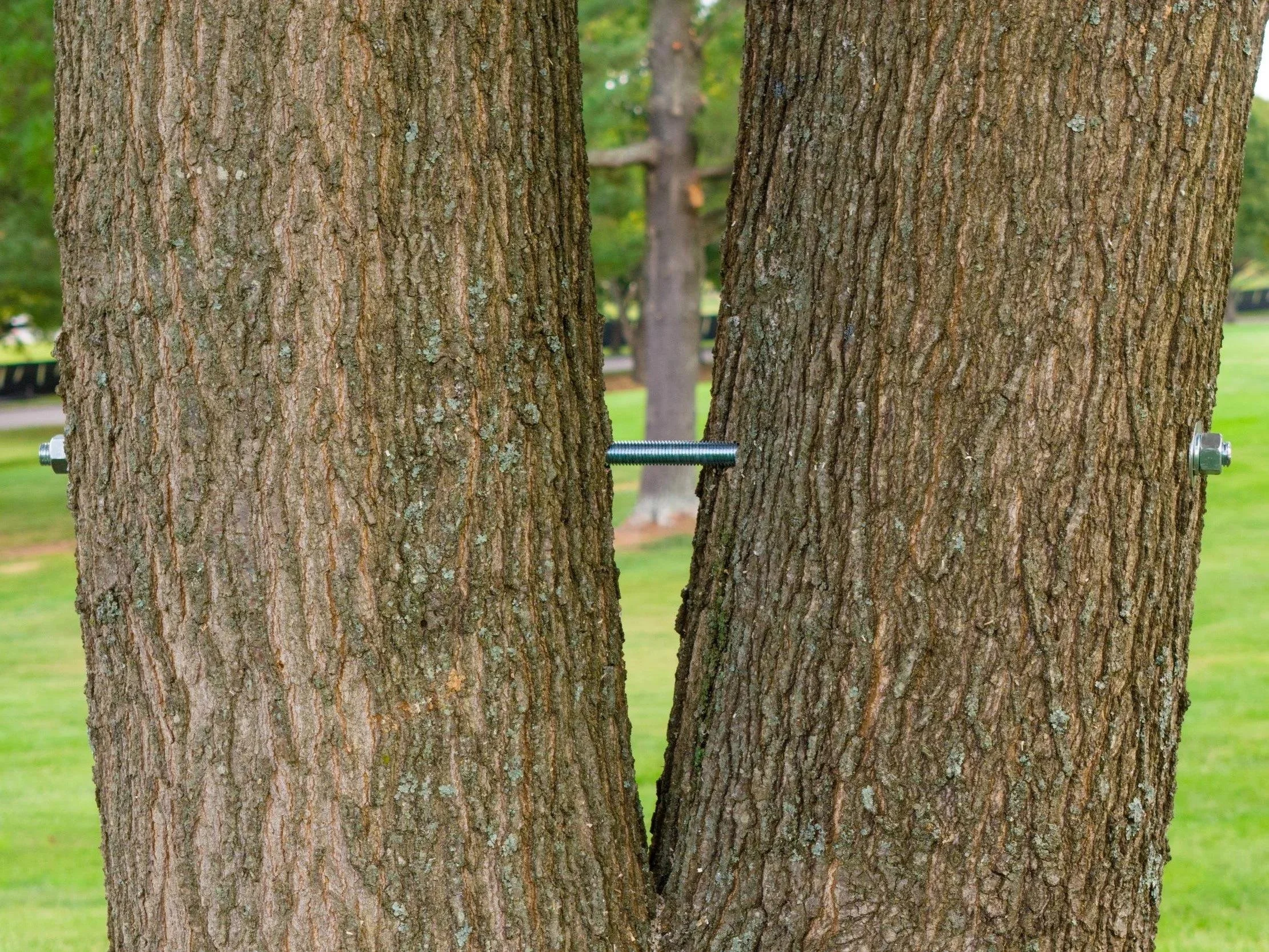
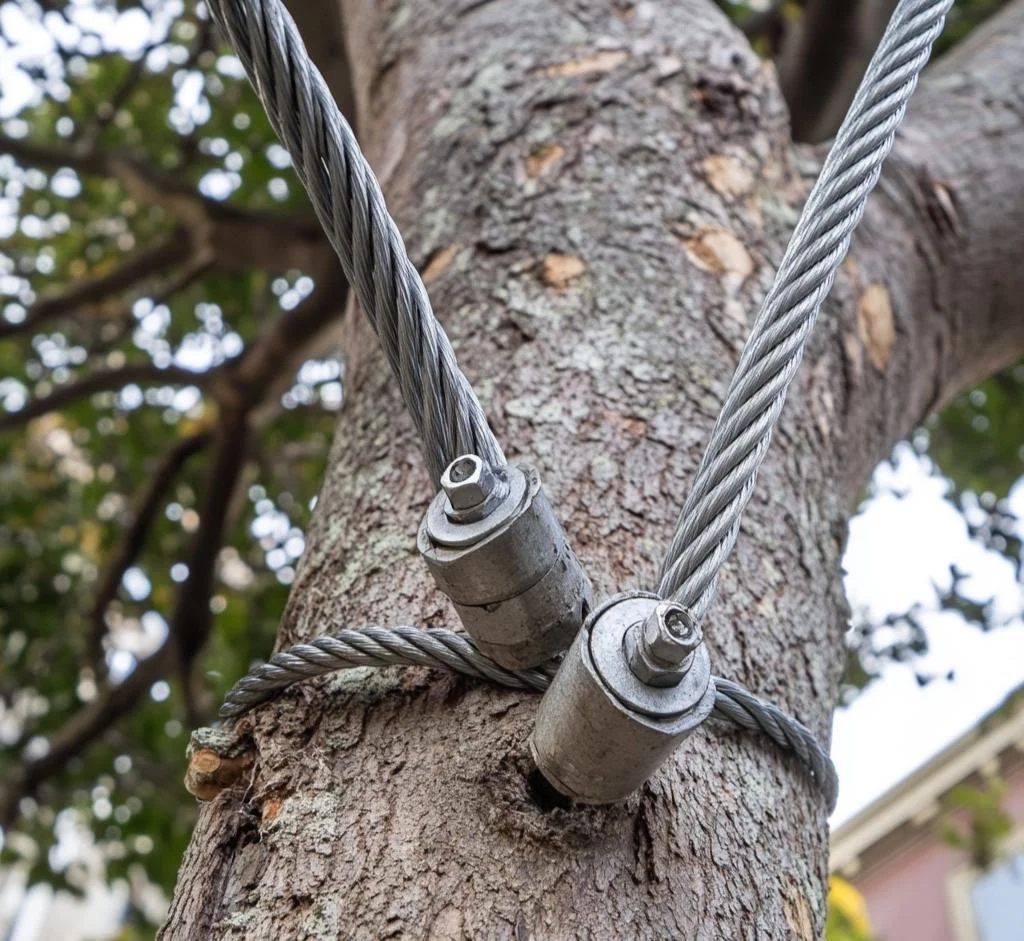
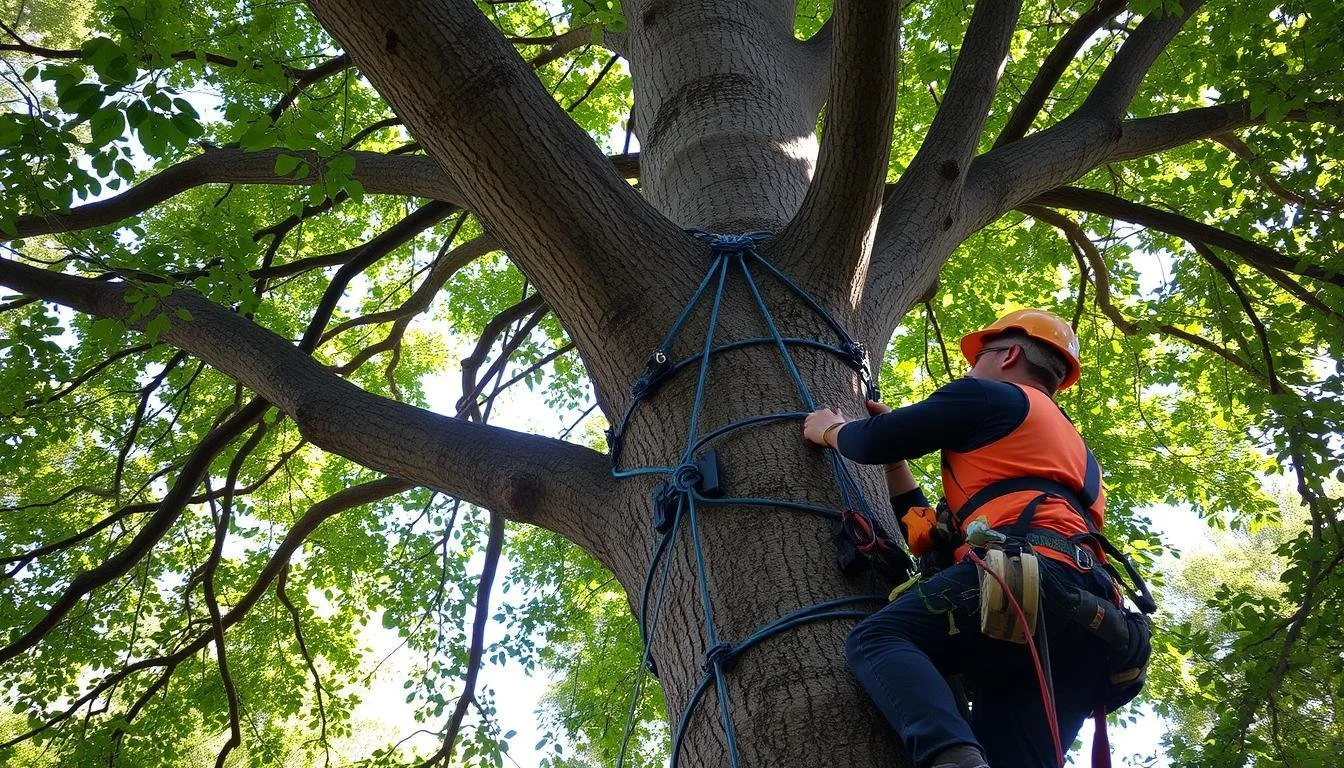
Some mature trees have weak branch unions or structural defects that don't require removal.
Instead, they may benefit from professional:
Cabling
Bracing
Structural support systems
These systems help reduce movement during high winds while preserving valuable trees.
7. Stay Safe During the Storm
If a storm damages a tree:
✔ Stay away from hanging limbs.
✔ Never approach trees touching power lines.
✔ Avoid attempting large tree removal yourself.
✔ Photograph the damage if insurance may be involved.
✔ Contact a professional arborist once conditions are safe.
What to Do After a Storm
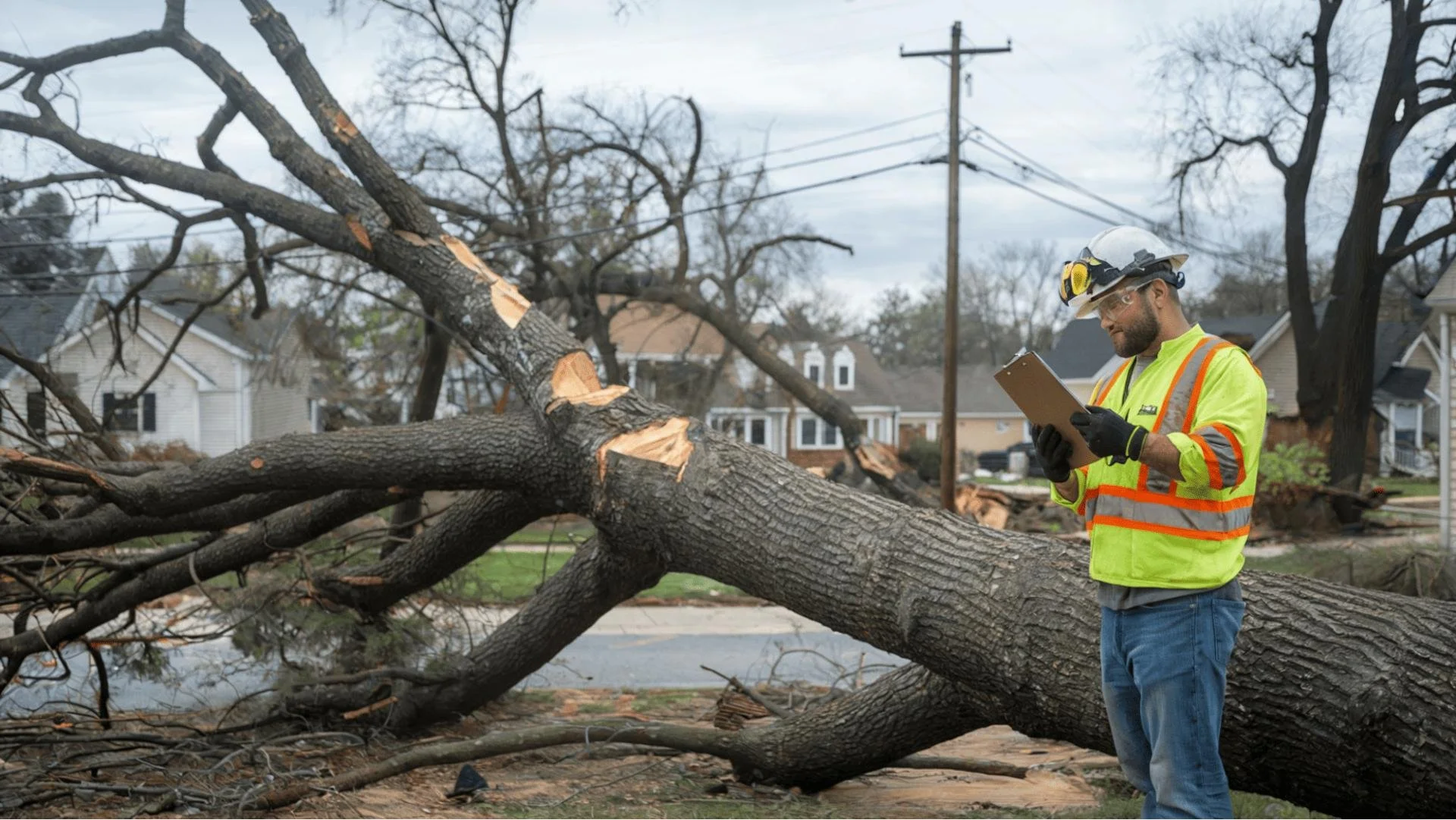
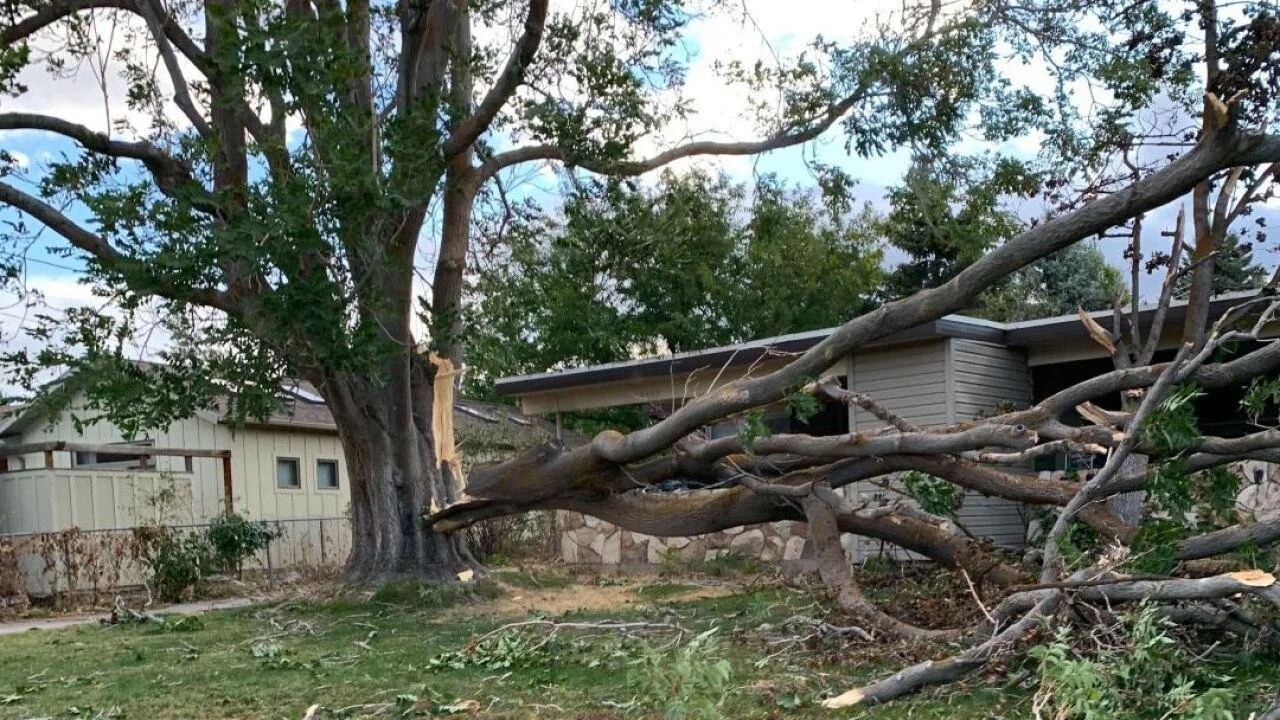
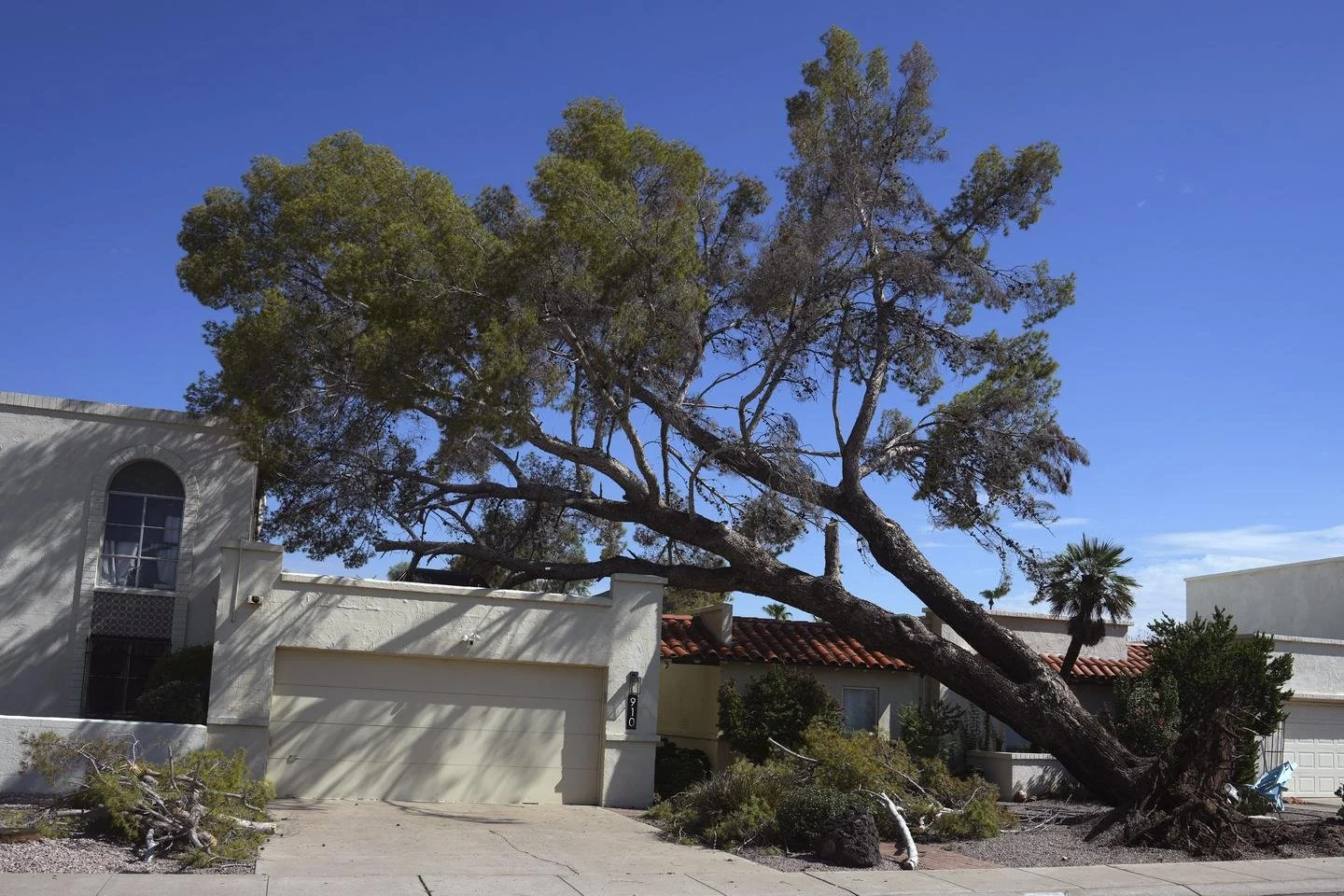
After severe weather:
Inspect your trees for:
Broken limbs
Splits in major branches
Leaning trunks
Lifted roots
Bark damage
Hanging branches
Even if damage appears minor, hidden structural issues can create future hazards.
An arborist can determine whether the tree can recover or if removal is the safest option.
Why Southern Utah Homeowners Trust Master Arbor
At Master Arbor, we've helped homeowners throughout:
St. George
Washington City
Hurricane
Ivins
Silver Reef
Washington County
prepare for—and recover from—Southern Utah's powerful summer storms.
Our certified arborists provide:
Tree risk assessments
Structural pruning
Cabling and bracing
Storm damage evaluations
Emergency tree services
Long-term tree health plans
Prepare Before the Next Storm Arrives
The best time to protect your trees isn't after a branch falls—it's before the storm arrives.
Preventative maintenance not only reduces storm damage but also helps extend the life of your trees and keeps your property safer.
Schedule Your Free Tree Safety Inspection
Master Arbor can help you prepare your landscape for monsoon season with:
Tree safety inspections
Structural pruning recommendations
Cabling and bracing evaluations
Deadwood removal
Storm damage prevention plans
👉 Contact Master Arbor today to schedule your free consultation and protect your trees before the next storm.
Frequently Asked Questions
-
Monsoon season typically runs from July through September, bringing afternoon thunderstorms, strong winds, lightning, and heavy rain.
-
Yes. Removing dead, weak, or damaged branches before storm season can significantly reduce the risk of storm damage. However, avoid excessive pruning during periods of extreme heat.
-
Yes. Even healthy trees can fail during severe weather, especially if they have hidden structural defects, shallow roots, or saturated soil.
-
Keep your distance and have the tree inspected by a certified arborist as soon as it's safe. Some trees recover, while others may develop hidden structural damage.
-
Not always. Many storm-damaged trees can be safely pruned and restored. A professional evaluation can determine whether the tree can be saved or if removal is the safest option.
Related Articles
Continue learning with these helpful resources:
